2026 FAO Internship Program (Food and Agriculture Organization) For Students Worldwide | How To Apply
Are you a passionate young professional looking to make a meaningful impact on global food security and agricultural development? The Food and Agriculture Organization (FAO) Internship Program 2026 offers an exceptional opportunity for students and recent graduates worldwide to gain hands-on experience with one of the most prestigious United Nations agencies. This comprehensive guide will walk you through everything you need to know about the FAO internship program and how to successfully apply.
What is the FAO Internship Program?
The FAO Internship Programme is a learning opportunity aimed at attracting talented young women and men who are strongly motivated to share their new perspectives, innovative ideas and latest research experience in FAO’s domains. The program provides selected participants with the opportunity to supplement their academic knowledge with practical work experience in fields related to the work of FAO.
The Food and Agriculture Organization works in over 130 countries worldwide with 195 member states, making it one of the largest and most influential international organizations dedicated to defeating hunger and improving nutrition and food security. Through this internship program, young professionals can contribute to achieving the UN Sustainable Development Goals while developing their professional skills in an international multicultural environment.
For students seeking similar international opportunities, check out these scholarship opportunities that can complement your career development journey.
Key Benefits of the FAO Internship Program
Professional Development
Interns gain invaluable experience working on real-world projects that directly impact global food security, agricultural development, and rural poverty alleviation. You’ll work alongside experienced professionals and learn from experts in various fields including agriculture, economics, nutrition, fisheries, forestry, and social sciences.
International Exposure
With 195 Members, FAO works in over 130 countries worldwide. This global reach means interns can potentially work in FAO headquarters in Rome, Italy, or in regional and country offices across Africa, Asia, Latin America, the Near East, and Europe. This international exposure is invaluable for anyone pursuing a career in international development or agriculture.
Networking Opportunities
Building professional connections with UN staff, fellow interns, and international development professionals can open doors for future career opportunities. Many former FAO interns have gone on to secure full-time positions within the UN system or other international organizations.
Skills Enhancement
Interns develop both technical and soft skills including project management, research and analysis, communication, report writing, and cultural competence—all highly valued in today’s global job market.
We encourage you to Join us on our different channels if you want to be the first to learn about immigration and scholarship opportunities.
- Whatsapp: Naijonline Scholarship Updates
- Facebook: Naijonline Scholarship Updates
- Twitter: Naijonline Scholarship Updates
Eligibility Requirements
Before applying, ensure you meet all the eligibility criteria for the 2026 FAO Internship Program:
Nationality Requirements
Candidates must be nationals of FAO Members. This includes virtually all countries worldwide, making the program accessible to students from diverse backgrounds and regions.
Educational Background
Candidates must be students enrolled in an under-graduate or graduate degree programme in a bona fide educational institution at the time of application, or recent graduates. This means you can apply whether you’re currently pursuing your bachelor’s degree, master’s degree, or have recently completed your studies.
Age Limit
Candidates should be aged between 21 and 30 at the start of their internship (i.e. internship should start before the candidate turns 31). This age range ensures the program targets young professionals in the early stages of their careers.
Language Proficiency
Candidates must have working knowledge of at least one FAO official language (English, French, Spanish, Arabic, Chinese or Russian). Knowledge of a second FAO official language will be considered an asset. Multilingual candidates have a competitive advantage in the selection process.
Technical Skills
Candidates should be able to adapt to an international multicultural environment, have good communication skills and be knowledgeable in the use of basic computer programmes. Strong interpersonal skills and technological competence are essential for success in the program.
Residence Status
Candidates should have appropriate residence or immigration status in the country of assignment prior to the start of the internship assignment. This means you must ensure you can legally work in the location where you’ll be assigned.
Family Relations
Candidates with family members (defined as brother, sister, mother, father) employed by FAO under any type of contract are not eligible for the Internship Programme. This policy ensures fairness and transparency in the selection process.
For students interested in furthering their education abroad after their internship, explore these study abroad opportunities to continue your international career journey.
Internship Duration
The duration of an internship assignment is between 3 and 11 months. This flexible timeframe allows the program to accommodate different academic calendars and personal circumstances. Students can typically arrange their internship to fit between semesters or take a semester off to complete a longer assignment.
The extended duration ensures interns can make meaningful contributions to their assigned projects while gaining substantial professional experience. Three-month internships are ideal for summer breaks, while longer assignments allow for deeper engagement with complex projects and initiatives.
Areas of Work and Specializations
FAO internships span a wide range of disciplines and specializations related to the organization’s mandate. Some of the key areas include:
Agriculture and Food Security
Work on projects related to sustainable agriculture, crop production, agricultural economics, and food security initiatives. Contribute to programs that help countries improve their agricultural productivity and ensure food availability for their populations.
Nutrition and Food Safety
Engage with programs focused on improving nutrition standards, combating malnutrition, and ensuring food safety across global supply chains. These positions are ideal for students in nutrition science, public health, or food technology.
Fisheries and Aquaculture
Support initiatives related to sustainable fishing practices, aquaculture development, and marine resource management. These roles suit students specializing in marine biology, environmental science, or natural resource management.
Forestry and Natural Resources
Contribute to forest conservation projects, sustainable land management initiatives, and programs addressing deforestation and climate change. Perfect for environmental science and forestry students.
Rural Development and Economics
Work on projects promoting rural livelihoods, agricultural economics, market development, and poverty reduction in rural communities. Economics, development studies, and social science students find these positions particularly relevant.
Communications and Advocacy
Support FAO’s communication efforts, develop advocacy materials, manage social media campaigns, and create content that raises awareness about food security and agricultural issues.
Information Technology and Data Management
Work on digital agriculture initiatives, data analysis projects, database management, and technology solutions that support FAO’s operations and programs.
Similar to other competitive programs, having a strong academic background in relevant fields increases your chances of selection. Students pursuing undergraduate scholarships in these fields should consider applying for FAO internships to enhance their practical experience.
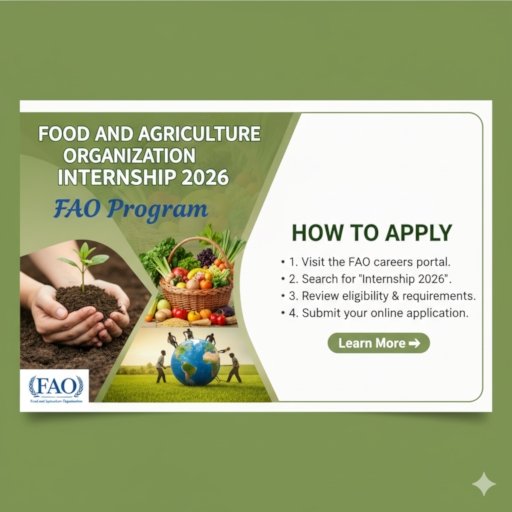
How to Apply for the 2026 FAO Internship Program
The application process is conducted entirely online through FAO’s career portal. Here’s a step-by-step guide:
Step 1: Visit the FAO Career Portal
Apply to the “Call for Expression of Interest”, which is published on our career portal. Navigate to the official FAO employment website and look for the internship program announcements.
Step 2: Prepare Required Documents
Interested candidates should apply online through the career portal enclosing a motivation letter and evidence of attendance at a recognized University.
Your application package should include:
- Updated CV/Resume: Highlight your educational background, relevant coursework, research experience, previous internships, volunteer work, language skills, and any publications or presentations.
- Motivation Letter: Write a compelling cover letter (typically 1-2 pages) explaining why you want to intern at FAO, how your skills and academic background align with FAO’s work, and what you hope to achieve during the internship.
- Academic Transcripts: Provide proof of enrollment in your current degree program or evidence of recent graduation.
- Proof of University Enrollment: Submit official documentation from your university confirming your student status.
- Language Certificates (if available): Include any certificates demonstrating proficiency in FAO’s official languages.
- If you need help, or have queries, please contact: Careers@fao.org
Step 3: Complete the Online Application
Fill out all required fields in the online application form accurately and completely. Ensure all information matches your supporting documents.
Step 4: Submit Your Application
Review your application thoroughly before submission. Once submitted, you’ll receive a confirmation email acknowledging receipt of your application.
Step 5: Application Review
Only selected candidates will be contacted. The selection process is competitive, and FAO receives thousands of applications for limited internship positions. If you don’t hear back within the specified timeframe, your application was not selected for that particular call.
Step 6: Reapply for Future Opportunities
Candidates who are not selected before the closing date and wish to be continuously considered for an assignment are requested to re-apply to the new Calls. Don’t be discouraged if your first application is unsuccessful. FAO regularly opens new calls for internship applications, and persistence often pays off.
Tips for a Successful Application
Tailor Your Application
Customize your motivation letter and CV for each specific internship position. Research the department or office you’re applying to and demonstrate how your skills and interests align with their work.
Highlight Relevant Experience
Emphasize coursework, research projects, previous internships, volunteer work, or extracurricular activities related to FAO’s mandate. Quantify your achievements whenever possible.
Demonstrate Passion and Commitment
Show genuine enthusiasm for FAO’s mission and explain how the internship fits into your long-term career goals in international development, agriculture, or related fields.
Proofread Carefully
Ensure your application materials are free of grammatical errors and typos. Have someone else review your documents before submission.
Showcase Cultural Awareness
Highlight any international experience, cross-cultural skills, or language abilities that demonstrate your readiness to work in a multicultural environment.
Start Early
Don’t wait until the last minute to apply. Give yourself plenty of time to gather documents, write a strong motivation letter, and complete the application form thoroughly.
For additional career development resources and opportunities, visit the services page for guidance on enhancing your professional profile.
What to Expect During Your FAO Internship
Work Environment
FAO provides a professional yet supportive work environment where interns are treated as valuable team members. You’ll work in offices equipped with modern technology and collaborate with colleagues from diverse cultural and professional backgrounds.
Supervision and Mentorship
Each intern is assigned to a supervisor who provides guidance, feedback, and support throughout the internship period. This mentorship is crucial for professional development and learning.
Learning Opportunities
Beyond your assigned tasks, you’ll have access to training sessions, workshops, seminars, and presentations that enhance your knowledge of FAO’s work and international development issues.
Networking Events
Many FAO offices organize social events and networking opportunities where interns can connect with staff members and fellow interns, building relationships that can benefit their future careers.
Financial Considerations
It’s important to note that many FAO internship positions are unpaid, though some offices may provide a stipend to help cover living expenses. The financial arrangements vary depending on the duty station and available funding. Before accepting an internship offer, clarify the financial terms and plan your budget accordingly.
Some interns secure funding through their universities, external scholarships, or government programs that support international internships. Research these options early in your planning process.
After Your Internship
Certificate of Completion
Upon successful completion of your internship, FAO provides a certificate and reference letter that can significantly enhance your resume and graduate school applications.
Career Opportunities
While internships don’t guarantee employment with FAO, they provide valuable experience and connections that can lead to future opportunities within the UN system or other international organizations.
Alumni Network
Join the growing network of FAO intern alumni who continue to support each other’s careers and stay connected to FAO’s mission long after their internships end.
Conclusion
The 2026 FAO Internship Program represents an outstanding opportunity for students and recent graduates worldwide to gain hands-on experience in international development while contributing to global food security and agricultural advancement. With positions available across multiple disciplines and duty stations worldwide, there’s likely an internship that aligns with your academic background and career aspirations.
Start preparing your application materials today, research FAO’s current projects and priorities, and don’t hesitate to apply even if you don’t meet every single criterion perfectly. The selection panel values potential, passion, and willingness to learn as much as previous experience.
For more information on international scholarships, study abroad programs, and career development opportunities, continue exploring resources available through educational platforms and career guidance services. Your journey toward a meaningful career in international development could begin with this FAO internship.
For the latest updates on scholarship opportunities and international programs, visit the official FAO website and bookmark their career portal to stay informed about new internship calls throughout 2026.