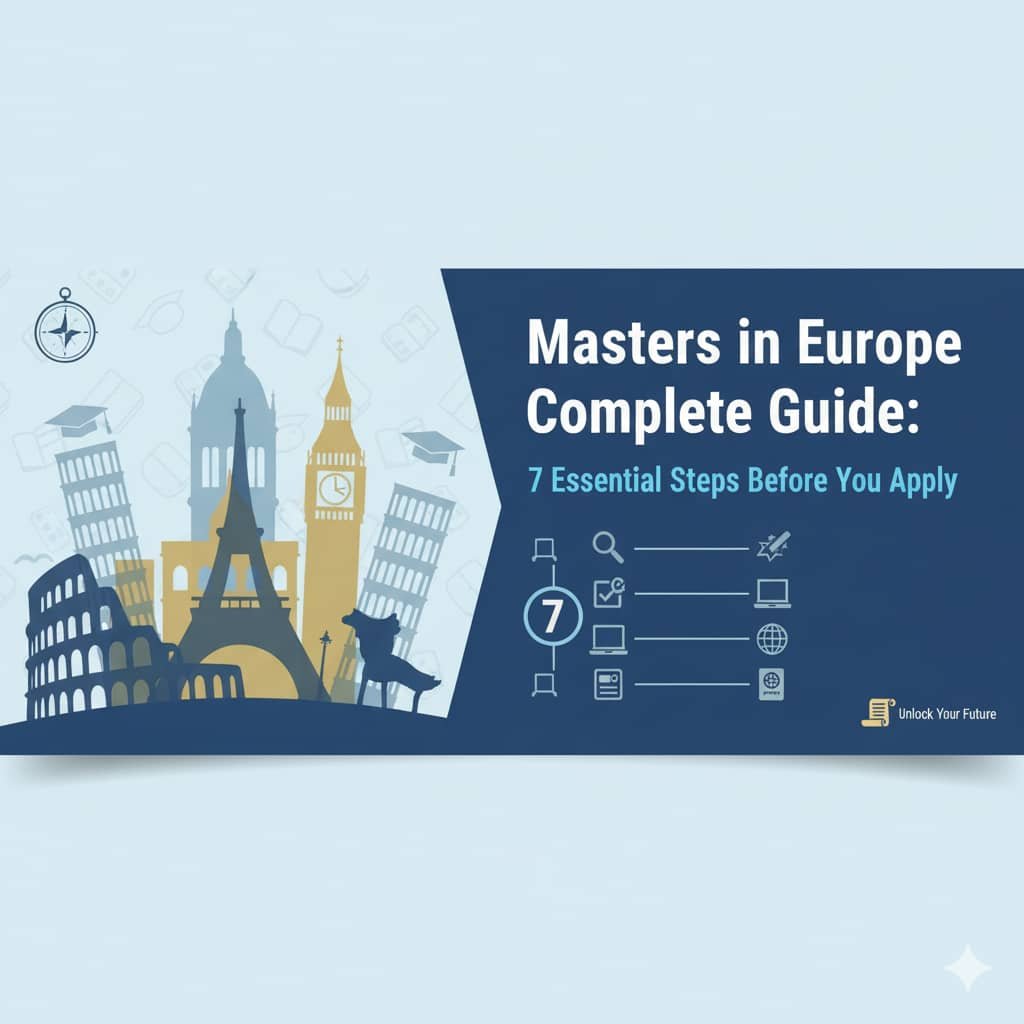
Complete Guide: 7 Essential Things to Know Before Applying for a Master’s Degree in Europe (2025)
Are you considering pursuing a Master’s degree in Europe as an international student? With its world-class universities, affordable tuition fees, and diverse cultural experiences, Europe has become the top study destination for graduate students worldwide. However, navigating the application process requires careful planning and understanding of key requirements.
This comprehensive guide will walk you through the 7 most important factors you must know before applying for a Master’s degree in Europe, ensuring you make informed decisions and avoid costly mistakes in your study abroad journey.
Why Choose Europe for Your Master’s Degree?
Europe offers a unique combination of affordable higher education, cultural diversity, and globally recognized universities. Unlike other study destinations, European countries provide excellent post-study work opportunities, less restrictive visa requirements, and access to trusted immigration pathways that can lead to permanent residency.
The continent’s strong educational system produces graduates who are highly sought after by employers worldwide, making a European Master’s degree a valuable investment in your future career.
7 Key Things to Know Before Applying for a Master’s Degree in Europe
1. Tuition Fees Vary Dramatically Across European Countries
One of the most crucial factors in your study abroad planning is understanding the significant variation in tuition costs across Europe. Your budget will largely determine which countries you can realistically consider.
Free or Low-Cost Education:
- Germany: Offers free education at public universities for both EU and international students
- Norway: No tuition fees at public institutions, regardless of nationality
- Finland: Free education for EU students; affordable fees for international students
- Sweden: Free for EU students; reasonable fees for international students
Moderate to Higher Costs:
- Netherlands: €2,000-€20,000 annually depending on program and university
- France: €3,770 for EU students; higher for international students
- United Kingdom: £15,000-£35,000 annually (post-Brexit changes apply)
Pro Tip: Even in tuition-free countries, always budget for administrative fees, semester contributions, and living expenses. Research fully funded scholarships early to maximize your funding opportunities.
2. Language of Instruction: English vs. Local Languages
Don’t assume that all Master’s programs in Europe are taught in English. While many universities now offer English-taught programs, especially in business, engineering, and sciences, others may require proficiency in the local language.
Countries with Extensive English Programs:
- Netherlands (95% of Master’s programs available in English)
- Germany (Over 1,000 English-taught programs)
- Sweden (Most international programs in English)
- Denmark (Strong English program offerings)
Countries Requiring Local Language Skills:
- France (Many programs require French proficiency)
- Spain (Spanish or Catalan often required)
- Italy (Italian language skills advantageous)
Action Step: Verify the language requirements on the official program webpage and consider starting language learning early if needed. Basic conversational skills will also enhance your daily life experience.
3. Program Duration: 1-2 Years with Strategic Implications
European Master’s degree duration typically ranges from 1-2 years, significantly impacting your financial planning and career timeline.
One-Year Programs:
- Advantages: Cost-effective, quick return to workforce, intensive learning
- Popular in: United Kingdom, some specialized programs in other countries
- Best for: Working professionals, career switchers, those with clear career goals
Two-Year Programs:
- Advantages: More research opportunities, deeper specialization, better networking
- Popular in: Germany, Netherlands, Scandinavian countries
- Best for: Research-oriented students, those seeking comprehensive knowledge
Financial Impact: A one-year program in the UK might cost £25,000 total, while a two-year program in Germany could cost €20,000 including living expenses, making Germany more economical despite the longer duration.
4. Scholarship Opportunities: Your Gateway to Affordable Education
Europe offers some of the world’s most generous international student scholarships. Understanding and applying for these funding opportunities can make your European education completely affordable.
Major European Scholarships:
Erasmus+ Program:
- Covers tuition, living allowances, and travel costs
- Available for joint degree programs across multiple European countries
- Highly competitive but offers full funding
DAAD Scholarships (Germany):
- Over 100,000 students funded annually
- Various programs for different academic levels
- Includes monthly stipends and health insurance
Netherlands Fellowship Programme:
- Full funding for students from developing countries
- Covers tuition, living expenses, and travel
Country-Specific Funding:
- Sweden: Swedish Institute Scholarships
- Norway: Quota Scheme scholarships
- Finland: CIMO scholarships
Application Strategy: Apply for scholarships simultaneously with your university applications, not afterward. This approach increases your chances of securing funding before making financial commitments. Many international scholarships have earlier deadlines than university applications.
5. Cost of Living: Strategic Location Planning
While tuition might be affordable, your cost of living in Europe can vary by up to 300% between different cities and countries.
Budget-Friendly Cities:
- Berlin, Germany: €800-1,000/month
- Prague, Czech Republic: €600-800/month
- Budapest, Hungary: €500-700/month
- Porto, Portugal: €600-900/month
Expensive Cities:
- London, UK: £1,500-2,000/month
- Zurich, Switzerland: €1,800-2,500/month
- Paris, France: €1,200-1,600/month
- Copenhagen, Denmark: €1,200-1,500/month
Money-Saving Strategies:
- Choose university towns over capital cities
- Look for student housing or shared accommodations
- Take advantage of student discounts (up to 50% on transport, museums, restaurants)
- Consider part-time work opportunities (20 hours/week typically allowed)
6. Visa and Immigration: Your Path to European Success
Your student visa for Europe determines much more than just study permission—it affects work rights, family reunification, and post-graduation opportunities.
Key Visa Considerations:
Work Rights During Studies:
- Germany: 20 hours/week or 120 full days annually
- Netherlands: 16 hours/week with work permit
- UK: 20 hours/week for degree students
- France: 964 hours annually (approximately 20 hours/week)
Post-Study Work Opportunities:
- Germany: 18-month job search visa after graduation
- Netherlands: 1-year orientation year for graduates
- France: 2-year post-study work permit for Master’s graduates
- Ireland: 2-year stay-back option
Family Considerations: Some countries allow spouses to work full-time on dependent visas, which can significantly impact your financial planning.
Critical Timeline: Start visa applications 3-4 months before your intended start date. Missing deadlines or incomplete documentation can delay your entire academic plan.
7. Career Prospects and Networking: Building Your European Future
Your Master’s degree in Europe should open doors to international career opportunities. Different countries offer varying levels of industry connections and graduate employment prospects.
Top Countries for Career Opportunities:
Germany:
- Strong engineering and technology sectors
- High demand for skilled graduates
- Excellent industry-university partnerships
- Average graduate salary: €45,000-55,000
Netherlands:
- International business hub
- English-speaking work environment
- High startup ecosystem participation
- Average graduate salary: €40,000-50,000
Ireland:
- European headquarters for tech giants
- Growing pharmaceutical and finance sectors
- English-speaking advantage
- Average graduate salary: €35,000-45,000
Networking Strategies:
- Join professional associations early
- Attend university career fairs and industry events
- Utilize LinkedIn to connect with alumni networks
- Consider internships during your studies
We encourage you to Join us on our different channels if you want to be the first to learn about immigration and scholarship opportunities.
- Whatsapp: Naijonline Scholarship Updates
- Facebook: Naijonline Scholarship Updates
- Twitter: Naijonline Scholarship Updates
Top European Countries for International Master’s Students
Germany: The Engineering and Technology Powerhouse
Germany remains the most popular destination for international students in Europe, offering free education at public universities and strong industry connections.
Key Advantages:
- No tuition fees at public universities
- Over 400 universities with international programs
- Strong job market in engineering, IT, and research
- 18-month post-study work visa
Popular Programs: Engineering, Computer Science, Business Administration, Natural Sciences
Netherlands: Innovation and International Business Hub
The Netherlands offers an exceptional combination of English-taught programs and international career opportunities.
Key Advantages:
- 95% of Master’s programs available in English
- High quality of life and international environment
- Strong connections to multinational corporations
- 1-year post-graduation work permit
Popular Programs: Business, International Relations, Engineering, Life Sciences
Sweden: Sustainability and Innovation Leader
Sweden provides world-class education with a focus on sustainability, innovation, and social responsibility.
Key Advantages:
- Cutting-edge research facilities
- Strong emphasis on work-life balance
- Generous scholarships for international students
- High English proficiency among locals
Popular Programs: Environmental Sciences, Engineering, Business, Social Sciences
Norway: Natural Resources and Technology Excellence
Norway offers free education and exceptional opportunities in energy, maritime, and technology sectors.
Key Advantages:
- No tuition fees at public institutions
- High standard of living
- Strong petroleum and maritime industries
- Beautiful natural environment
Popular Programs: Engineering, Marine Technology, Business, Environmental Studies
Financial Planning: Making Your European Dream Affordable
Comprehensive Budget Planning
Creating a realistic budget is essential for your study abroad success. Here’s a comprehensive breakdown:
Annual Costs Overview:
Germany (Public University):
- Tuition: €0-500 (administrative fees)
- Living costs: €9,600-12,000
- Total: €10,100-12,500
Netherlands:
- Tuition: €2,000-20,000 (depending on program)
- Living costs: €12,000-15,000
- Total: €14,000-35,000
Sweden (for EU students):
- Tuition: €0
- Living costs: €10,800-13,200
- Total: €10,800-13,200
Funding Your European Education
Scholarship Strategy Timeline:
- 12-18 months before: Research scholarship opportunities
- 10-12 months before: Prepare application materials
- 8-10 months before: Submit scholarship applications
- 6-8 months before: Apply to universities
- 4-6 months before: Apply for student visas
Application Timeline and Strategy
12-Month Application Timeline
18-24 months before study start:
- Research countries, universities, and programs
- Begin language learning if required
- Start scholarship research
12-18 months before:
- Take required tests (IELTS, TOEFL, GRE, GMAT)
- Prepare transcripts and recommendation letters
- Apply for scholarships
6-12 months before:
- Submit university applications
- Apply for student visas
- Secure accommodation
3-6 months before:
- Finalize travel arrangements
- Complete pre-departure preparations
- Connect with current students and alumni
Making the Most of Your European Master’s Experience
Beyond Academics: Maximizing Your Investment
Your European Master’s degree offers opportunities beyond classroom learning:
Cultural Integration:
- Learn basic local language phrases
- Participate in student organizations and cultural events
- Travel within Europe using student discounts
Professional Development:
- Attend industry conferences and networking events
- Seek internship opportunities
- Build relationships with professors for research opportunities
Personal Growth:
- Develop independence and cross-cultural communication skills
- Build an international network of friends and colleagues
- Gain global perspectives that enhance your career prospects
Conclusion: Your European Adventure Awaits
Pursuing a Master’s degree in Europe represents one of the most rewarding investments you can make in your future. With careful planning, strategic scholarship applications, and clear understanding of visa requirements, you can access world-class education at affordable costs.
Remember that each country offers unique advantages—from Germany’s free education and strong industry connections to Netherlands’ international business opportunities and Sweden’s innovation focus. The key is matching your academic goals, financial capacity, and career aspirations with the right European destination.
Start your planning early, apply for multiple scholarships, and don’t hesitate to reach out to current students and university admissions offices for guidance. Your European education journey will not only provide excellent academic credentials but also invaluable life experiences and international perspectives that will benefit your entire career.
Ready to begin your application? Visit Naij Online for more comprehensive guides on study abroad opportunities, scholarship applications, and immigration pathways to help you achieve your European education dreams.