The Complete Guide to Proof of Funds for Study Abroad Applications in 2025
Dreaming of studying abroad but confused about financial documentation requirements? You’re not alone. Proof of funds remains one of the most critical yet misunderstood aspects of international student applications. Whether you’re planning to study in the US, UK, Canada, or Germany, this comprehensive guide will walk you through everything you need to know about securing proper financial documentation for your study abroad journey.
What is Proof of Funds?
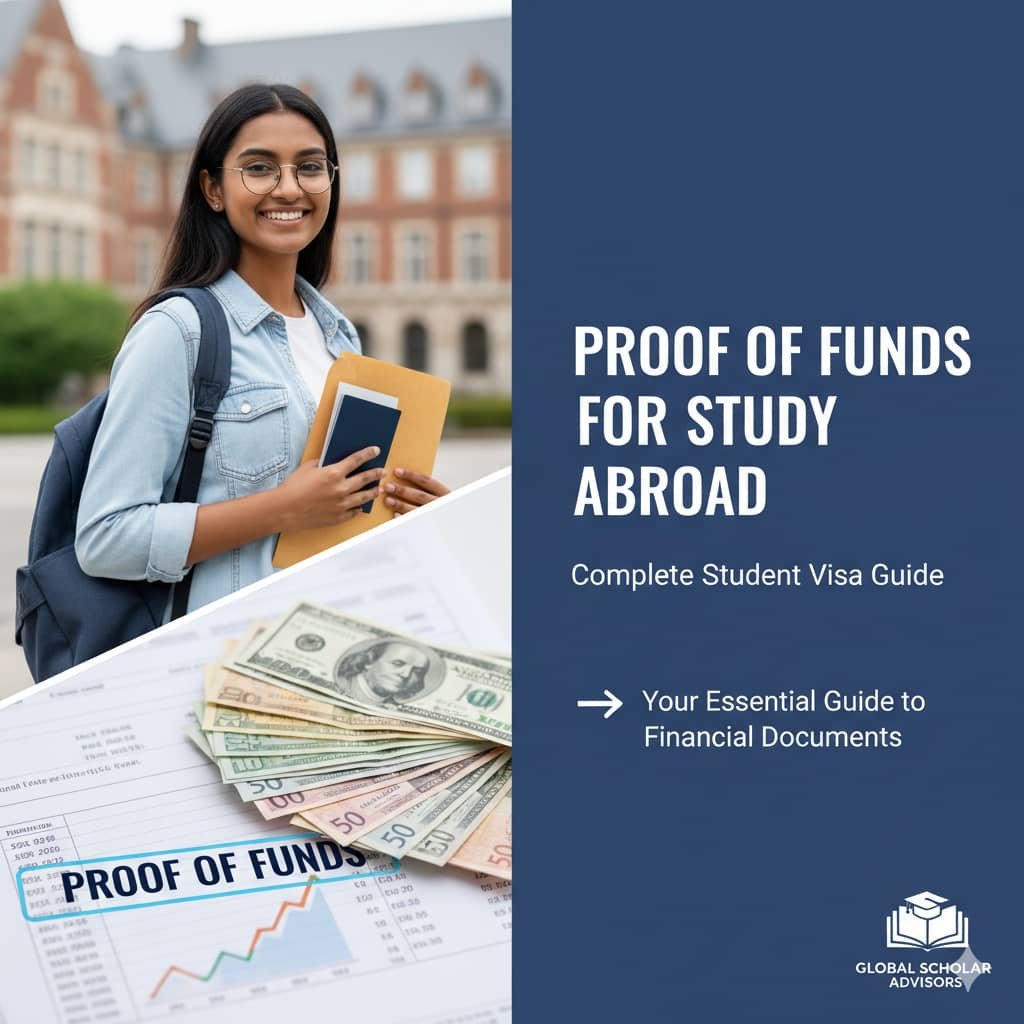
Proof of funds (sometimes called financial evidence or financial documentation) is official documentation that demonstrates you have sufficient financial resources to cover your tuition fees, living expenses, and other costs as an international student. This isn’t just paperwork – it’s your financial passport to studying abroad.
Immigration officers and university admission teams use this documentation to verify that you won’t become financially stranded during your studies. The funds must be:
- Accessible: Available for immediate use when needed
- Verified: Held in recognized financial institutions
- Sufficient: Meeting or exceeding the minimum required amounts
- Recent: Usually within 28-90 days depending on the country
Think of proof of funds as your financial credibility score for international education. Without it, even stellar academic credentials won’t guarantee visa approval.
Why Proof of Funds Matter for Your Study Abroad Dream
The Reality Check
Every year, thousands of qualified students face visa rejections solely due to inadequate financial documentation. According to recent immigration statistics, financial insufficiency accounts for approximately 35% of student visa denials across major study destinations.
What Immigration Officers Look For
When reviewing your application, visa officers assess three key factors:
1. Financial Stability Can you maintain consistent funding throughout your program duration? Officers want evidence of stable, long-term financial support rather than sudden large deposits.
2. Genuine Intent Do your financial resources align with your study plans? Suspiciously high amounts without clear sources can raise red flags about your true intentions.
3. Risk Assessment Will you likely overstay your visa due to financial constraints? Solid financial documentation reduces perceived immigration risk.
The Domino Effect of Insufficient Funds
Poor financial documentation can trigger:
- Immediate visa rejection
- Delayed application processing
- Loss of university admission offers
- Missed academic year enrollment
- Reapplication complexities
For Nigerian students specifically, immigration guidance becomes even more crucial due to historically higher scrutiny levels from certain embassies.
Essential Documents for Financial Verification
Primary Financial Documents
1. Bank Statements Your most important financial document. Requirements typically include:
- Duration: Last 3-6 months of statements
- Consistency: Regular account activity without suspicious large deposits
- Currency: Preferably in the destination country’s currency or USD
- Authentication: Official bank letterhead and stamps
2. Scholarship Documentation If you’ve secured educational funding:
- Award letters specifying exact amounts and coverage details
- Duration confirmation showing funding period
- Payment schedules indicating disbursement timelines
- Terms and conditions outlining any obligations
3. Sponsorship Letters For family-sponsored students:
- Relationship proof (birth certificates, marriage certificates)
- Sponsor’s financial documents (bank statements, employment letters)
- Affidavit of support legally binding the sponsor to provide support
- Income verification showing sponsor’s earning capacity
4. Student Loan Approval Educational loans from recognized institutions:
- Approval letters with confirmed loan amounts
- Disbursement schedules showing payment timelines
- Interest rates and terms for transparency
- Collateral documentation if applicable
Supporting Financial Documents
Employment Verification
- Recent payslips (last 3-6 months)
- Employment contracts or offer letters
- Tax returns or income tax certificates
- Professional references
Investment Portfolios
- Fixed deposit certificates
- Mutual fund statements
- Stock portfolio valuations
- Property valuation reports (where accepted)
Business Ownership
- Business registration certificates
- Audited financial statements
- Tax compliance certificates
- Bank statements for business accounts
Country-Specific Financial Requirements
United Kingdom: New 2025 Financial Rules
The UK has significantly updated its financial requirements for international students. As of September 2025, you must demonstrate:
London-based Studies:
- £1,400 per month for living expenses
- Full tuition coverage for up to 9 months
- 28-day maintenance period for fund verification
- Final bank statement dated within 31 days of visa application
Outside London:
- £1,100 per month for living expenses
- Same tuition and verification requirements as London
Special Considerations:
- Students with 12+ months UK residence may qualify for exemptions
- Established student route applicants have reduced requirements
- Official financial sponsorship may waive certain conditions
Related Reading: UK Student Visa Updates 2025
Canada: Enhanced Financial Thresholds
Starting September 1, 2025, Canada implemented stricter financial requirements:
Single Students:
- CAD $22,895 for annual living expenses (excluding tuition)
- Proof of full tuition payment for first year
- Additional funds for dependents if applicable
Students with Dependents:
- CAD $35,040 for spouse and one child
- Proportional increases for additional children
- Healthcare insurance coverage proof
Acceptable Proof Options:
- Guaranteed Investment Certificate (GIC)
- Canadian bank account statements
- Student loan approval letters
- Tuition payment receipts
- Provincial attestation letters (where applicable)
Explore More: Canadian Immigration Pathways
United States: F-1 Visa Financial Evidence
US student visa applications require comprehensive financial documentation:
Required Financial Proof:
- 3 years of bank statements (applicant or sponsor)
- Tax returns for the same period
- Employment verification letters
- I-20 form with accurate cost estimates
Key Focus Areas:
- Liquid funds availability (savings accounts, CDs)
- Consistent income sources over time
- Detailed scholarship information on I-20
- Clear fund accessibility without restrictions
Assets NOT Typically Accepted:
- Real estate valuations
- Gold or jewelry appraisals
- Cryptocurrency holdings
- Unliquidated business assets
Germany: Blocked Account System
Despite offering relatively affordable education, Germany maintains strict financial requirements:
Blocked Account Requirements:
- €10,332 minimum annual deposit (€861 monthly withdrawal limit)
- Additional amounts for higher monthly access
- Approved banking institutions only
- Account establishment before visa application
Alternative Financial Proof:
- Scholarship award documentation
- Parental income guarantees with bank backing
- Educational loan approvals from German institutions
- Official financial guarantees from German residents
Learn More: Germany Study Programs
We encourage you to Join us on our different channels if you want to be the first to learn about immigration and scholarship opportunities.
- Whatsapp: Naijonline Scholarship Updates
- Facebook: Naijonline Scholarship Updates
- Twitter: Naijonline Scholarship Updates
Australia: Comprehensive Financial Assessment
Australia requires detailed financial planning demonstration:
Required Coverage:
- 12 months of tuition fees
- 12 months of living expenses (AUD $21,041 for students)
- Travel costs to and from Australia
- Dependent costs if applicable (AUD $7,362 per child annually)
Additional Requirements:
- Genuine Temporary Entrant (GTE) assessment
- Source of funds explanation
- Financial capacity for program duration
- Health insurance coverage proof
Common Mistakes to Avoid
Critical Financial Documentation Errors
1. Last-Minute Fund Arrangements Problem: Depositing large amounts just before application Solution: Maintain consistent account balances over required periods Impact: Can trigger source of funds investigations
2. Inadequate Supporting Documentation Problem: Providing bank statements without context Solution: Include comprehensive supporting documents explaining fund sources Impact: May lead to credibility questions
3. Currency Confusion Problem: Submitting documents in wrong currencies without conversion Solution: Use official exchange rates and provide converted amounts Impact: Can result in insufficient fund calculations
4. Outdated Financial Information Problem: Using old bank statements or expired documents Solution: Ensure all documents meet freshness requirements Impact: Automatic application rejection possible
5. Inconsistent Information Problem: Discrepancies between different financial documents Solution: Cross-verify all amounts and dates before submission Impact: Raises authenticity concerns
Red Flags That Trigger Additional Scrutiny
- Sudden large deposits without clear explanations
- Multiple small deposits appearing to artificially inflate balances
- Inconsistent account activity during the verification period
- Missing signatures or stamps on official documents
- Unexplained fund sources especially from business activities
Pro Tips for Strong Financial Documentation
Advanced Preparation Strategies
1. Start Financial Planning Early Begin organizing your financial documentation at least 6 months before application deadlines. This allows time for:
- Building consistent account balances
- Gathering all required supporting documents
- Addressing any documentation gaps
- Currency conversion planning
2. Create a Financial Timeline Develop a month-by-month plan showing:
- Expected expenses throughout your program
- Fund availability at different study phases
- Emergency fund allocations
- Exchange rate impact considerations
3. Professional Financial Review Consider having your documentation reviewed by:
- Immigration consultants specializing in student visas
- Educational advisors familiar with specific country requirements
- Financial advisors experienced with international transfers
Documentation Best Practices
Organized Presentation
- Create a clear financial document index
- Use consistent formatting across all documents
- Provide English translations for non-English documents
- Include cover letters explaining complex financial situations
Digital and Physical Backup
- Maintain both digital scans and physical copies
- Store documents in multiple secure locations
- Create document checklists for each application
- Keep extra copies for visa interviews
Professional Translation
- Use certified translation services for non-English documents
- Ensure translations include official stamps and certifications
- Verify technical financial terms are accurately translated
- Keep original documents with translations
Last-Minute Checklist
Before submitting your application, verify:
• All amounts meet or exceed minimum requirements
• Documents are within required freshness periods
• Supporting explanations are included for complex fund sources
• Currency conversions use official exchange rates
• All documents bear required official stamps and signatures
• Information consistency across all documents
• Backup documentation for unusual financial situations
Conclusion: Your Path to Study Abroad Success
Securing proper proof of funds documentation is often the determining factor between study abroad success and disappointment. While the requirements may seem overwhelming, systematic preparation and attention to detail can significantly improve your chances of visa approval.
Remember that financial documentation requirements continue evolving, especially post-2025. Stay updated with the latest requirements through reliable sources like NaijOnline’s education section and official government immigration websites.
Your study abroad dream is achievable with proper planning, authentic documentation, and persistent effort. Don’t let financial paperwork stand between you and your international education goals.
Ready to Take the Next Step?
Explore More Resources:
Stay Updated: Subscribe to our education newsletter for the latest study abroad opportunities, visa updates, and financial aid information.