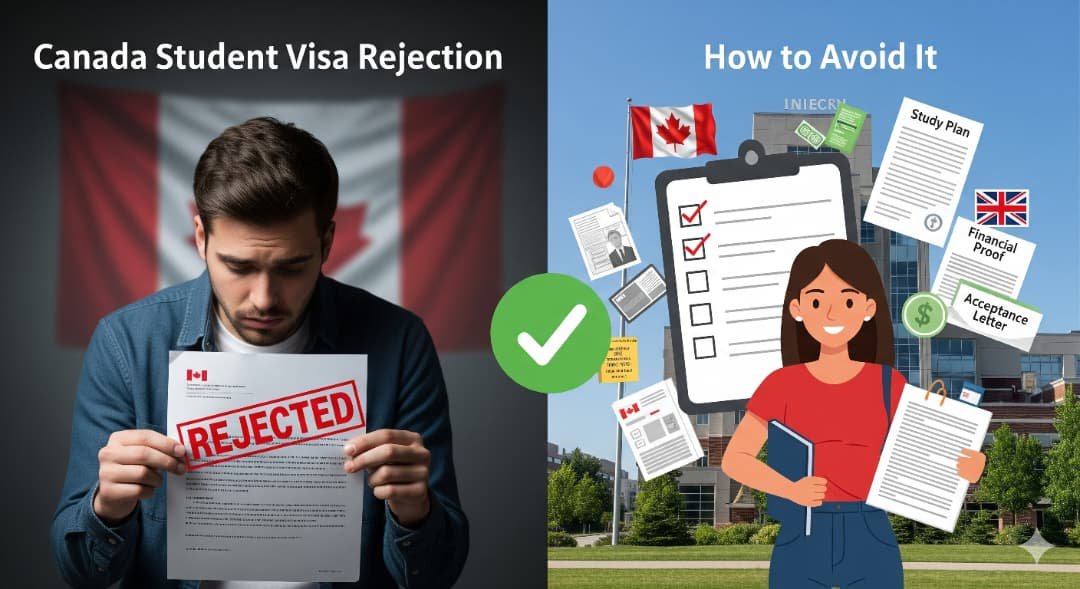
7 Common Reasons For Canada Student Visa Rejection (And How To Avoid Them in 2025)
Introduction
Planning to study in Canada? You’re not alone. Canada currently hosts 642,480 international students, representing a 13% increase from the previous year, making it one of the world’s most sought-after study destinations. However, with this popularity comes increased scrutiny – and unfortunately, higher rejection rates.
The harsh reality? Canada’s student visa rejection rate jumped dramatically from 34% in 2023 to 52% in 2024, leaving thousands of hopeful students devastated. But here’s the silver lining: most of these rejections stem from preventable mistakes that you can easily avoid with proper preparation.
In this comprehensive guide, we’ll explore the seven most common reasons for Canada student visa rejection and provide you with actionable strategies to strengthen your application. Whether you’re applying for the first time or reapplying after a rejection, this article will significantly improve your chances of success.
What Is A Canada Student Visa?
Before diving into rejection reasons, let’s clarify what you’re actually applying for. A Canada student visa (officially called a study permit) is your gateway to studying at any Designated Learning Institution (DLI) in Canada.
Think of it as a two-part document:
- Visitor Visa/eTA: Allows entry into Canada
- Study Permit: Authorizes your stay and study activities
Both components work together – you need both to successfully study in Canada. Missing either one jeopardizes your entire academic journey.
Pro Tip: Always verify that your chosen institution appears on Canada’s official DLI list before applying.
We encourage you to Join us on our different channels if you want to be the first to learn about immigration and scholarship opportunities.
- Whatsapp: Naijonline Scholarship Updates
- Facebook: Naijonline Scholarship Updates
- Twitter: Naijonline Scholarship Updates
7 Critical Reasons For Canada Student Visa Rejection
1. Insufficient Proof of Financial Resources
Why It Matters: Financial inadequacy accounts for approximately 35% of all student visa rejections. Immigration officers need concrete evidence that you can cover tuition fees, living expenses, and return transportation without becoming a financial burden on Canada.
What Officers Look For:
- Tuition payment receipts or confirmation
- Guaranteed Investment Certificate (GIC) of at least CAD $10,000
- Proof of 12+ months living expenses (approximately CAD $12,000-15,000)
- Clear source of funds documentation
How To Avoid This Rejection:
- Document Everything: Provide bank statements spanning 4-6 months showing consistent balances
- Show Fund Sources: Include employment letters, property documents, or family support affidavits
- Consider GIC: A Guaranteed Investment Certificate demonstrates serious financial commitment
- Scholarship Integration: If you’ve received financial aid, highlight it prominently – consider exploring international scholarship opportunities to strengthen your application
Red Flags To Avoid:
- Sudden large deposits without explanation
- Borrowed money that must be repaid
- Insufficient funds for your specific program duration
2. Incomplete or Inconsistent Documentation
The Problem: Document discrepancies create immediate red flags. Officers process hundreds of applications daily – inconsistencies suggest either dishonesty or carelessness.
Essential Documents Checklist:
- Valid passport with at least 18 months validity
- Academic transcripts and certificates
- Language proficiency scores (IELTS/TOEFL/PTE)
- Letter of acceptance from DLI
- Statement of Purpose (SOP)
- Financial documentation
- Medical examination results
- Police clearance certificates
Best Practices:
- Consistency is Key: Ensure names, dates, and details match across all documents
- Quality Scans: Submit clear, high-resolution document copies
- Translation Requirements: Get official translations for non-English documents
- Organization: Create a document checklist and review everything twice
For students seeking additional funding opportunities, exploring scholarship programs for international students can strengthen your financial profile.
3. Poor Academic Performance or Profile Mismatch
Why Academic Records Matter: Your educational background must demonstrate readiness for Canadian academic standards. Weak grades or unexplained gaps raise concerns about your ability to succeed.
Common Academic Red Flags:
- Significant drops in academic performance
- Extended study gaps without explanation
- Low language proficiency scores
- Program choice incompatible with previous education
Strengthening Your Academic Profile:
- Address Weaknesses Honestly: Explain any academic setbacks with supporting documentation
- Highlight Strengths: Emphasize relevant coursework, projects, or achievements
- Professional Experience: Demonstrate how work experience compensates for academic gaps
- Language Preparation: Achieve competitive IELTS/TOEFL scores well above minimum requirements
Academic Enhancement Tip: Consider taking preparatory courses or earning additional certifications related to your chosen field before applying.
4. Unclear Intent to Return Home
The Temporary Resident Dilemma: Canada issues study permits as temporary documents. Officers must believe you’ll return home post-graduation, not use education as immigration backdoor.
Demonstrating Home Country Ties:
- Family Connections: Immediate family members remaining in home country
- Property Ownership: Real estate or business investments
- Career Opportunities: Job offers or family business involvement
- Social Obligations: Community involvement or ongoing responsibilities
Crafting Your Return Intent:
- Detail specific career goals achievable in your home country
- Explain how Canadian education enhances domestic opportunities
- Avoid mentioning permanent residence aspirations
- Show knowledge of your home country’s industry needs
5. Missing Letter of Acceptance
Non-Negotiable Requirement: Without a valid acceptance letter from a DLI, your application is automatically rejected. This document proves academic eligibility and institutional commitment.
Acceptance Letter Essentials:
- Official letterhead and signatures
- Program details and duration
- Start date and campus location
- Tuition fees and payment deadlines
- Conditional acceptance terms (if applicable)
Verification Steps:
- Confirm your institution’s DLI status on official government websites
- Verify acceptance letter authenticity directly with the institution
- Ensure program details match your visa application exactly
Financial Tip: Consider paying a portion of tuition upfront to demonstrate serious commitment and financial readiness.
6. Program-Career Mismatch
The Logical Progression Test: Officers expect your program choice to make logical sense given your educational background and career goals. Sudden field changes without explanation appear suspicious.
Common Mismatches:
- Engineering graduate applying for culinary arts
- Business professional pursuing fine arts without artistic background
- Career pivot without transitional explanation
Justifying Career Changes:
- Detailed Explanation: Use your SOP to thoroughly explain career transition rationale
- Supporting Evidence: Include relevant certifications, volunteer work, or preliminary courses
- Long-term Vision: Connect your new career path to future opportunities in your home country
- Gradual Transition: Show progressive steps toward your new field
Career Development Resources: Explore professional development scholarships that align with your career transition goals.
7. Work Experience Inconsistencies
Professional Credibility: Your work history must align with and support your study goals, especially for graduate programs. Inconsistencies or gaps require clear explanation.
Work Experience Documentation:
- Employment verification letters
- Salary statements and tax documents
- Professional reference letters
- Career progression evidence
Addressing Employment Issues:
- Career Gaps: Explain unemployment periods with supporting documentation
- Field Changes: Justify professional pivots with logical reasoning
- Skill Development: Show how work experience enhances your academic pursuits
Related Scholarship Opportunities for Canadian Studies
While preparing your student visa application, consider exploring additional funding sources to strengthen your financial profile:
International Funding Options
- Government Scholarships: Many countries offer bilateral education agreements with Canada
- University-Specific Awards: Canadian institutions provide merit-based scholarships for international students
- Private Foundation Grants: Corporate and non-profit organizations support international education
Scholarship Application Tips:
- Apply early – scholarship deadlines often precede visa application periods
- Tailor applications to specific scholarship criteria
- Highlight unique backgrounds and experiences
- Demonstrate community involvement and leadership potential
For comprehensive scholarship listings and application guidance, visit international education funding resources.
What To Do If Your Canada Student Visa Gets Rejected
Rejection isn’t the end of your Canadian dream. Here’s your recovery roadmap:
Step 1: Understand the Specific Rejection Reasons
- Request GCMS Notes: Global Case Management System notes provide detailed officer comments
- Analysis Period: Take 2-3 weeks to thoroughly understand all concerns
- Professional Consultation: Consider immigration lawyer guidance for complex cases
Step 2: Address All Identified Issues
- Financial Improvements: Strengthen funding documentation
- Academic Enhancements: Improve language scores or obtain additional qualifications
- Documentation Completion: Fill all information gaps
- Intent Clarification: Revise your Statement of Purpose
Step 3: Strategic Reapplication
- Timing Considerations: Wait at least 3-6 months before reapplying
- Application Improvements: Submit a significantly stronger application package
- New Supporting Evidence: Include additional documents addressing previous concerns
Step 4: Consider Alternative Pathways
- Different Institution: Apply to alternative Canadian schools
- Program Modifications: Consider related programs with better acceptance rates
- Preparatory Programs: Start with shorter courses to establish Canadian academic history
10 Proven Strategies To Increase Visa Approval Chances
1. Institution Selection Strategy
Choose DLI institutions with strong international student support and reasonable acceptance rates.
2. Financial Over-Preparation
Demonstrate funds exceeding minimum requirements by 20-30% to show financial comfort.
3. Professional SOP Writing
Craft a compelling, logical narrative connecting your past experiences to future goals.
4. Early Application Submission
Apply 3-4 months before program start dates to avoid processing delays.
5. Document Authentication
Use certified translations and notarized documents to ensure credibility.
6. Medical Examination Completion
Complete required health assessments promptly and accurately.
7. Language Proficiency Excellence
Achieve scores significantly above minimum requirements.
8. Professional Consultation
Work with licensed immigration consultants for complex cases.
9. Multiple Application Strategy
Apply to several programs to increase acceptance odds.
10. Continuous Communication
Maintain contact with chosen institutions throughout the application process.
Understanding Canada’s 2025 Immigration Landscape
With Canada expecting 1.3 million immigrants between 2023-25, the country remains committed to international talent attraction. However, increased applications mean higher standards for student visa approval.
Recent Policy Changes
- Enhanced financial requirement verification
- Stricter academic credential evaluation
- Improved fraud detection systems
- Increased processing times during peak seasons
Future Considerations
- Digital application platform improvements
- Streamlined processes for high-demand programs
- Enhanced support for international students
- Continued focus on post-graduation employment pathways
Financial Planning For Canadian Education
Cost Breakdown (Annual Estimates)
- Undergraduate Programs: CAD $20,000 – $50,000
- Graduate Programs: CAD $25,000 – $60,000
- Living Expenses: CAD $12,000 – $18,000
- Additional Costs: CAD $3,000 – $5,000 (books, transportation, personal expenses)
Funding Strategies
- Scholarship Applications: Start 18-24 months before intended start date
- Part-time Work: International students can work 20 hours/week off-campus
- Co-op Programs: Many programs include paid work experience
- Graduate Assistantships: Research and teaching opportunities for advanced students
Conclusion: Your Path to Canadian Education Success
Canada student visa rejection rates may be rising, but armed with the right knowledge and preparation, your application can stand out from the crowd. Remember these key takeaways:
- Financial Documentation is your foundation – over-prepare rather than meet minimums
- Consistency across all documents builds credibility
- Clear Intent to return home addresses officer concerns
- Logical Progression in your education and career path makes sense to reviewers
- Professional Guidance can make the difference in complex cases
The journey to Canadian education requires patience, preparation, and persistence. Every successful application tells a compelling, consistent story that leaves no room for doubt.
Don’t let rejection statistics discourage you. Instead, use this guide to build an unshakeable application that demonstrates your readiness, capability, and commitment to Canadian academic success.
Ready to start your Canadian education journey? Begin by researching scholarship opportunities that can strengthen your application and reduce financial burden.
Related Articles:
- Top Canadian Universities for International Students
- Scholarship Guide for African Students
- IELTS Preparation Tips for Canadian Universities
Have questions about your Canada student visa application? Share your concerns in the comments below, and our education experts will provide personalized guidance.