



When an employer in Canada wants to hire a worker from another country, they often need something called a Canada Labour Market Impact Assessment, or LMIA. This is an important document from the government that helps decide if hiring a foreign worker is good for Canada’s job market.
The LMIA checks if there are Canadian citizens or permanent residents available to do the job first. If not, the employer can hire a foreign worker without harming job opportunities for Canadians.
LMIA is crucial because it protects Canadian jobs and supports the country’s economy by allowing employers to fill labour gaps when needed. Understanding LMIA is key for employers and foreign workers who want to follow Canadian rules and make the hiring process smooth.
What is a Labour Market Impact Assessment (LMIA)?
A Labour Market Impact Assessment (LMIA) is basically a permission slip from the Canadian government that an employer needs before hiring someone from another country to work in Canada. Think of it as a way for the government to check that hiring a foreign worker won’t hurt job opportunities for Canadians or people who already have the right to work here.
Here’s how it works in simple terms: When a Canadian employer wants to hire a foreign worker, they first have to prove that they looked for a Canadian citizen or permanent resident who could do the job but could not find anyone qualified. This shows that there are no Canadians ready or able to fill that position. If that’s the case, then the government might issue a positive LMIA, which means it’s okay to hire the foreign worker because it won’t cause harm to Canadian workers.
The LMIA also makes sure that foreign workers will be treated fairly. That means the employer has to pay the foreign worker the same wages that a Canadian worker would get for the same job. So it protects both Canadians and foreign workers from unfair hiring practices or unfair pay.
In short, the LMIA balances Canada’s need for foreign talent with protecting jobs and fair treatment for Canadian workers. It helps keep the job market fair and stable, making sure employers don’t skip Canadian workers and only bring in foreigners where there’s a real need. It is an important step to making sure everyone, Canadian or foreign, has a fair shot at good work and fair pay in Canada.
Read Next: Best Jobs in Canada for Zimbabweans| Complete Guide 2025
When is an LMIA Needed?
Usually, an employer in Canada needs to get an LMIA when they want to hire a foreign worker for a temporary job. This is because the government wants to make sure that Canadian workers have the first chance at jobs before employers hire from outside the country.
Most jobs where Canadian workers are expected to be available require an LMIA. This includes many sectors like agriculture, hospitality, trucking, caregiving, and other types of temporary work. Employers must prove that they tried to find a Canadian or permanent resident for the job but could not find anyone suitable.
However, there are some situations where an LMIA is not needed. For example, certain work permits allow exemptions from having an LMIA. These include cases under international trade agreements like NAFTA (now USMCA), where citizens of the United States and Mexico can work in Canada without an LMIA. Also, some categories like intra-company transfers (where a company moves an employee from one country office to Canada) or workers who are spouses of certain visa holders might not need an LMIA.
Which jobs need an LMIA and which don’t often depends on the type of job and the worker’s immigration status. Employers need to check if the position they want to fill requires an LMIA or if it is exempt. If it requires an LMIA, the employer has to apply and get approval before hiring a foreign worker.
An LMIA is usually needed to ensure Canadian workers have a fair chance at jobs and foreign workers are hired only when there is a real need. But there are exceptions where hiring a foreign worker does not require this government approval. Knowing when an LMIA is needed helps employers follow the right process to hire foreign talent legally in Canada.
Who Applies for the LMIA?
The main person responsible for applying for an LMIA is the employer, the company or business in Canada that wants to hire a foreign worker. The workers themselves cannot apply for an LMIA. It’s the employer’s job to show the government why they need to hire someone from outside Canada.
To do this, the employer must prove two important things. First, they need to show that they have looked for Canadian citizens or permanent residents who could fill the job but could not find anyone qualified or available. Second, they must explain why hiring a foreign worker is necessary for their business.
In summary, the employer takes charge of the LMIA application to prove that hiring a foreign worker is needed and fair. The worker benefits by using the positive LMIA to get their work permit and come to Canada legally.
How to Apply for an LMIA
Applying for an LMIA takes careful planning and preparation by the employer. Here’s what employers generally need to do in easy-to-understand steps:
1. Gather Important Documents
Employers must collect all the necessary documents that prove the job is real and that they have tried to hire Canadian workers first. These documents include:
- A clear job description explaining the duties and requirements of the job
- Proof that the job was advertised so Canadians had a chance to apply
- Information about the wage or salary offered to the worker, which must match Canadian standards
Read Next: US Jobs for Canadian Citizens: Your Complete Guide
2. Advertise the Job
The employer needs to show that they posted the job in different places like the Canadian Job Bank and relevant websites for at least four weeks. They have to keep records of where and when the job was advertised and explain why Canadians who applied were not suitable.
3. Fill Out the Application
Employers must fill out the LMIA application forms carefully. They need to provide all the details about the business, the job, recruitment efforts, and the foreign worker they want to hire.
4. Submit the Application
The completed application, along with all supporting documents and proof of job advertisements, is sent to Employment and Social Development Canada (ESDC). This is usually done online, but sometimes by mail.
5. Pay the Application Fee
There is a fee to apply for an LMIA. Currently, the fee is $1,000 Canadian dollars per foreign worker. This fee must be paid when submitting the application.
6. Wait for Processing
The processing time can change depending on the type of job, how complete the application is, and the current workload of the government office. Some applications can be fast-tracked if they are for high-demand jobs.
LMIA Application Process
The LMIA application involves several important steps from start to finish.
1. Submitting the Application
The employer first submits their complete LMIA application to Employment and Social Development Canada (ESDC). This includes all required forms, job details, proof of recruitment efforts, and the application fee.
2. Thorough Review by ESDC
Once received, ESDC carefully studies the application to check if the employer genuinely needs a foreign worker. They want to be sure hiring the foreign worker won’t harm Canadian workers or the job market.
3. Asking for More Information
During the review, ESDC might ask the employer for more documents or details if anything is missing or unclear. Sometimes they may also conduct interviews or phone calls with the employer to better understand the situation.
4. Application Processing Time
The time it takes to get a decision varies. Some LMIAs can be processed in a few weeks, while others might take several months. The length depends on the type of job, the LMIA stream (like high-wage or low-wage), and how complete or complex the application is.
5. Decision Made
At the end of the review, ESDC will either approve the application and issue a positive LMIA, or they will refuse it with a negative LMIA. A positive LMIA means the employer can hire the foreign worker legally; a negative LMIA means they cannot.
To sum it up, the LMIA process is about the government carefully checking if hiring a foreign worker is fair and necessary. Employers need to provide thorough information, respond to questions quickly, and wait patiently while the government does its review.
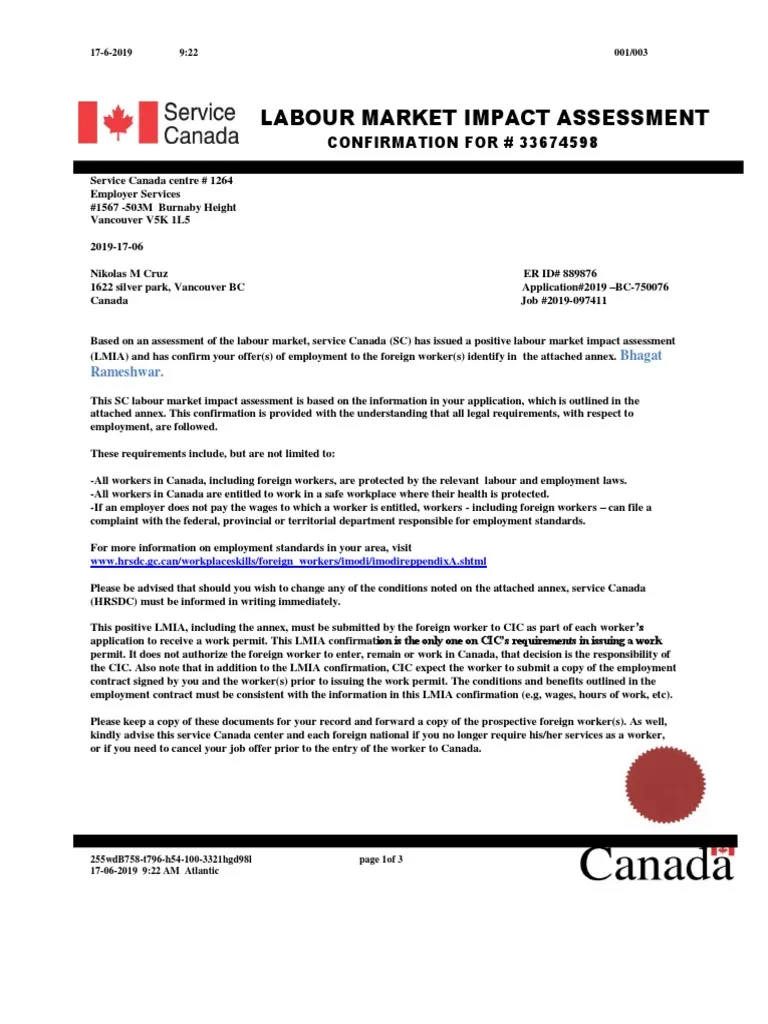
How Employers Prove They Need a Foreign Worker
To get a positive LMIA, the employer needs to show the government that they really tried to hire Canadians or permanent residents first, but couldn’t find anyone suitable for the job. Here’s how they do that:
1. Advertising the Job
The employer must advertise the job opening widely in Canada. This includes posting it on the Government of Canada’s Job Bank, which is mandatory. They also have to post the job in at least two other places, like popular job websites such as LinkedIn or Indeed. The job must be advertised for at least four weeks to give Canadian workers a fair chance to see and apply.
2. Keeping Proof of Advertising
The employer must keep records and provide proof of where, when, and how long the job was advertised. This shows they made a serious effort to find Canadian workers.
Read Next: Canada Immigration: How to Immigrate to Canada Easily with Visa Sponsorship in 2025
3. Showing No Qualified Canadians Applied or Were Available
If Canadians or permanent residents applied but did not meet the job requirements or were not available to start work, the employer must explain this clearly. They have to prove that hiring a foreign worker is necessary because there are no suitable Canadians for the job.
4. Explaining the Business Need
The employer also explains why they need a foreign worker for the job. Maybe the job requires special skills that are hard to find locally, or the business needs someone quickly to keep operating smoothly.
If the employer can prove all this, the government will likely approve the LMIA and give a positive result. This means the employer can legally hire the foreign worker. If the proof is not strong enough, the LMIA might be refused.
So, proving the need for a foreign worker is all about showing the employer gave Canadians a fair chance and that hiring abroad is really necessary to run the business well.
Positive vs Negative LMIA
When an employer applies for an LMIA, the government reviews the application and makes one of two main decisions: positive or negative.
A positive LMIA means the government agrees that there is a real need for a foreign worker to fill the job. They have checked and confirmed that no Canadian citizen or permanent resident is available or qualified for the position. It also means hiring the foreign worker will not harm Canadian workers or the job market. With a positive LMIA, the employer can officially offer the job to the foreign worker, who can then use the LMIA document to apply for a work permit to come and work legally in Canada. Positive LMIAs are usually valid for six months from the date they are issued, giving enough time for the worker to apply for the permit.
A negative LMIA means the government found that either there are qualified Canadians available to do the job or hiring a foreign worker could hurt Canadian workers or the labor market. In this case, the LMIA application is refused. When an LMIA is negative, the employer cannot hire the foreign worker for that job. The employer will have to look again to find a Canadian worker or reconsider their hiring needs.
In simple terms, a positive LMIA is like getting a green light from the government to hire a foreign worker, while a negative LMIA is a red light, meaning the employer must stop and look for Canadian workers instead. This system helps protect Canadian jobs while allowing foreign workers to fill real labour market gaps when needed.
Impact of LMIA on Foreign Workers
A positive LMIA is very important for a foreign worker who wants to work legally in Canada. First, the foreign worker usually needs a positive LMIA from the employer to apply for a Canadian work permit. Without this, they often cannot get permission to work in Canada.
Once the government issues a positive LMIA, it is valid for 18 months from the date it is given. This means the foreign worker has up to 18 months to use the LMIA to apply for their work permit.
The LMIA also comes with specific rules and conditions that both the employer and the foreign worker must follow.
For instance, the employer must pay the foreign worker a fair wage, which is at least equal to the standard wages for that job in the province or territory. The job duties must match what was described in the LMIA application, so the foreign worker does the type of work that was approved.
These conditions help protect foreign workers from unfair treatment or exploitation. The LMIA ensures they are treated fairly and have the same rights as Canadian workers in terms of pay and working conditions.
The LMIA is a key step that allows foreign workers to get work permits and work legally in Canada, while also making sure they are protected by clear rules about pay and job duties. This system benefits both the worker and the Canadian labour market.
Read Next: Is It Worth Moving from Canada to USA? All You Need to Know
Important Tips for Employers and Foreign Workers
If you want your LMIA application to be successful, there are some helpful tips both employers and foreign workers should follow.
1. Employers Should Recruit Thoroughly
Employers need to show they really tried to hire Canadian citizens or permanent residents first. This means advertising the job in the right places for at least four weeks. The ads must reach the right audience and follow government rules. Keeping proof of these recruitment efforts is very important.
2. Provide Clear and Accurate Information
When filling out the LMIA application, employers must be honest and detailed. The job description, salary, and business information should all be clear and accurate. Mistakes, missing info, or inconsistencies can delay the process or lead to refusal.
3. Follow Wage Standards
Employers must offer salaries that meet or exceed Canadian standards for the particular job and region. Paying less than required can cause an LMIA application to be rejected.
4. Avoid Common Mistakes
Incomplete applications, missing documents, or weak evidence of recruitment efforts are common reasons for delays or refusals. Taking time to prepare a full, strong application helps avoid these problems.
5. Seek Help When Needed
Both employers and foreign workers should get advice from official government sources or immigration professionals if they are unsure about any step. Expert help can make the process smoother and reduce stress.
Recent Changes and Updates to LMIA Rules
The Canadian government often updates the rules for LMIA to keep up with changes in the job market and economy. In recent years, several important changes have been made that employers and foreign workers should know about.
One major update is that application fees and processing times have changed. It can now take longer to get an LMIA approval, sometimes several months, because the government reviews applications more carefully. Employers need to plan ahead and be ready for these longer wait times.
There have also been new rules about the kinds of jobs that need an LMIA. For example, in some cities or regions with high unemployment rates, LMIA applications for low-wage jobs are not being processed right now. This means employers in those areas may face restrictions when trying to hire foreign workers for certain types of work.
Wage thresholds, the minimum wages employers must offer, have been raised in many regions. This is to ensure foreign workers are paid fairly and to protect Canadian workers from unfair competition.
Because these rules can change quickly, it’s very important for both employers and foreign workers to stay informed.
The best way to do this is by regularly checking the official website of Employment and Social Development Canada (ESDC) or trusted immigration news sources. Keeping up-to-date helps avoid surprises and ensures everyone follows current laws and requirements.
LMIA rules are changing to make the hiring process more fair and protect Canadian workers, but these changes mean employers must be extra careful and stay informed when applying for LMIA.
A Labour Market Impact Assessment (LMIA) is basically a permission slip from the Canadian government that an employer needs before hiring someone from another country to work in Canada. Think of it as a way for the government to check that hiring a foreign worker won’t hurt job opportunities for Canadians or people who already have the right to work here.
Conclusion
The Canada Labour Market Impact Assessment (LMIA) is a key part of hiring foreign workers. It helps protect Canadian jobs by ensuring that foreign workers are hired only when no Canadians are available for the position. For employers, understanding LMIA requirements and following the correct procedures is essential to successfully hire international talent.
For foreign workers, a positive LMIA opens the door to legal employment in Canada under fair conditions. Both parties benefit from knowing how LMIA works and how to navigate the process effectively to support Canada’s workforce and economy.


